
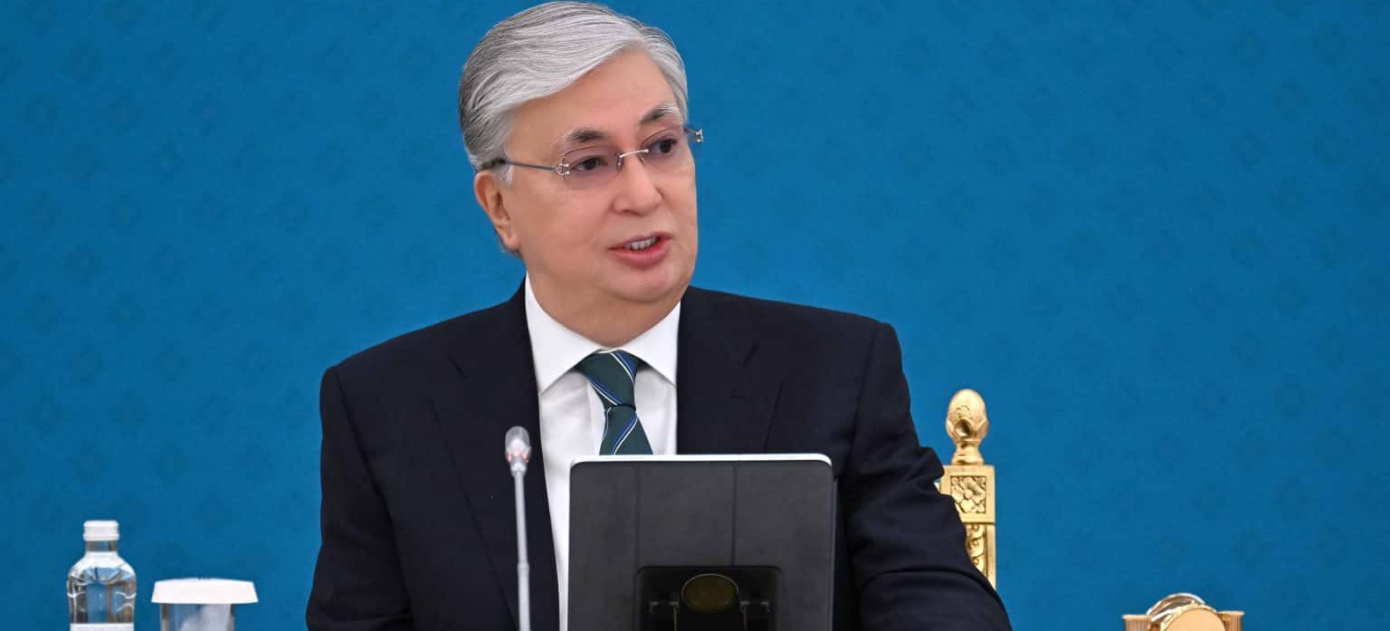
The sphere of education and science of the country is under the special attention of the Head of state. On April 12, 2023, the Head of state held a meeting of the National Council for Science and Technology under the President. The President stressed that “all the successes in the history of mankind have been achieved owing to knowledge” and “especially in the current era of advanced technologies, no progress is possible without science”. Therefore, recognition of the importance of science for stimulating economic growth and improving citizens’ quality of life is a requirement of the time. With the support of the President, significant investments are being made in research and development aimed at promoting technological progress and innovation. The modernisation of scientific organizations began, the number of internships in the leading scientific centers of the world increased. The field of science is becoming more attractive to young people. As a result, scientific cooperation is developing, international experts are involved, and various initiatives are being implemented to strengthen the research infrastructure. Continuing this course, domestic science is faced with the task of becoming the vanguard in the modernisation of the national economy. In this regard, by the order of the President, the Academy should become the center of scientific thought and an authoritative structure carrying out expert activities. The most important position will be the impeccability of the reputation and status of the National Academy of Sciences, becoming a catalyst for real scientists who will make every effort for scientific research and benefit society.
On April 12, 2024, Head of State Kassym-Jomart Tokayev established science as a cornerstone of statehood: "Where science is strong, the state will also be strong... We must direct all our efforts toward promoting knowledge and science." Science as a factor of sovereignty and security: The Head of State emphasized that in the modern world, technological superiority outweighs the possession of resources. "Without science, a country is doomed." The state's capacity to withstand natural disasters (floods, earthquakes) and man-made accidents directly depends on the quality of scientific forecasting and expertise. Objective: To create an effective system for emergency forecasting and the in-depth study of climate change.
Forming a Strong Academic Vertical The National Academy of Sciences under the President of the Republic of Kazakhstan must become a "center of attraction" for scientists and the primary expert body providing recommendations for state decision-making. It has been instructed to open regional branches of the Academy in order to bridge scientific thought with local production and regional specificities.
Synchronizing Science with Business Needs Implementing mechanisms where private businesses receive significant tax incentives if they invest in R&D (Research and Development). Large mining and extraction companies must allocate 1% of their revenue to the development of science, and this process must be transparent and targeted.
Developing Human Resource and Research Potential Expanding the "500 Internships" program and increasing grant funding specifically for young researchers. Transforming regional universities into world-class research centers through partnerships with foreign higher education institutions. Creating a unified platform, "Science.gov.kz", to provide scientists with access to all databases and repositories.
Priority Areas (Technological Sovereignty) The Head of State highlighted sectors that require immediate scientific reinforcement:
Water conservation and hydrology.
Agricultural science (breeding new drought-resistant crop varieties).
Geology and exploration of critical metals.
Energy and peaceful atom.
On September 26, 2025, Head of State Kassym-Jomart Tokayev delivered a key directive: "Science is not only the pursuit of truth; it is an instrument of national power." This thesis established the transition from structural reforms to the practical realization of a "knowledge economy." Transition to the "Smart Economy" model: Increasing the share of high-tech products in the structure of GDP and exports. Science must become a profitable sector rather than an expense item. Synchronizing the development plans of national companies with the scientific developments of domestic research institutes.
Forming a "Technological Foresight" Kazakhstan should not attempt to cover all fields, but is obliged to focus on niche "growth points" where the country possesses natural advantages. Deep processing of raw materials, new materials, rare earth metals, and biotechnologies in agriculture.
Reforming the Commercialization System Simplifying the mechanisms for transferring technologies from laboratories to production. It was instructed to implement a "venture co-financing" system, where the state shares risks with private investors when introducing innovative developments.
Artificial Intelligence and Big Data The President of the Republic of Kazakhstan set the task of creating a powerful computing infrastructure (a supercomputer) for the needs of scientists. The scientific community must gain full access to state data repositories (Big Data) to conduct research in fields such as demography, healthcare, and urban planning.
Scientific Personnel and Social Elevators It was instructed to launch a special "return movement" program for Kazakhstani scientists working in the world's leading research centers, creating appropriate conditions for them in Kazakhstan. Implementing a system of independent KPIs for heads of research institutes and universities, directly linked to the actual integration of their developments into the economy.