
Training specialists to meet economic needs was discussed in Almaty.
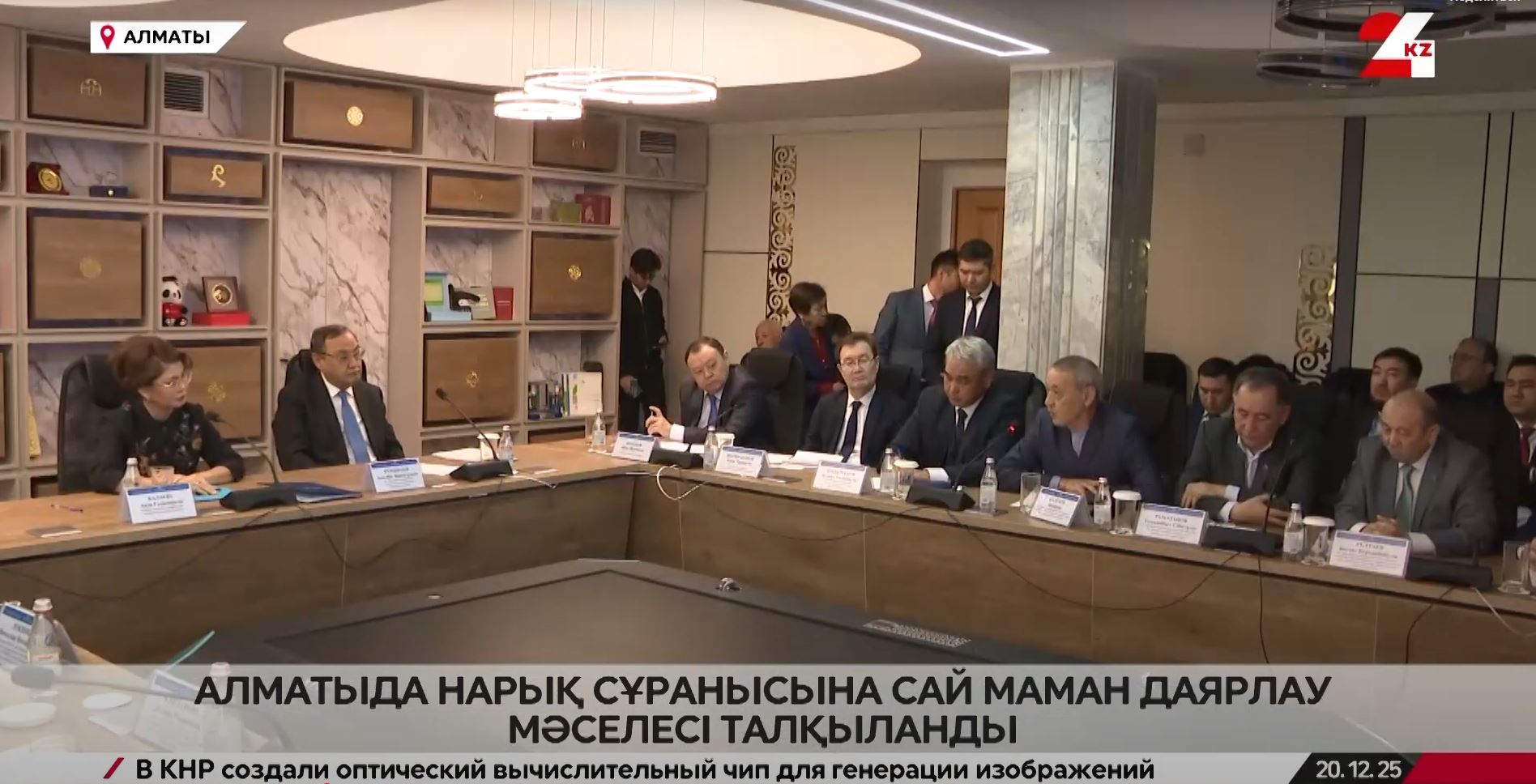
By 2030, the economy will need nearly 200,000 specialists. On the second day of Deputy Prime Minister and Minister of Culture and Information Aida Balayeva's working visit to Almaty, they discussed ways to address the imbalance between personnel training and labor market needs, 24KZ reports. A meeting on the transformation of higher education and science in the context of digital development was held at the National Academy of Sciences under the President of the Republic of Kazakhstan and Al-Farabi Kazakh National University, with the participation of university and research organization leaders. Currently, there remains a clear imbalance between the specialists the labor market demands and those being trained by universities and colleges. According to forecasts for 2026–2030, Almaty needs almost equally specialists with higher education and those with technical and vocational education. However, in reality, there are too many graduates with higher education, while there is a shortage of blue-collar workers and technical specialists. Overall, by 2030, the economy will need nearly 208,000 new specialists. The largest number of specialists are in trade, education, healthcare, and social services. To stop training personnel "blindly," a system for forecasting personnel needs is being launched at the direction of Aida Balayeva. A unified questionnaire is being developed for this purpose, which will be completed by all enterprises and organizations in the regions. Based on this data, universities and colleges should review their educational programs, identify which specialists are over- or under-resourced, and adjust student enrollment both in quantity and in the content of their studies. The idea is simple: first understand who the economy needs, and only then train personnel. This approach should reduce imbalances in the labor market and make graduates truly in demand. During her working visit to Almaty, the Deputy Prime Minister visited the FARABI HUB, the flagship of the Almaty innovation ecosystem, covering 9,000 square meters, where she met with university rectors. The topics discussed included the commercialization of scientific research, the implementation of AI in education, and strengthening the interaction between science and the city's economy. Particular attention was paid to the quality of personnel training. The need to transition from formal lecture formats to practice-oriented learning, the development of digital pedagogy, and the strengthening of on-the-job training was emphasized. In this context, the role of the Academy of Sciences in expert evaluation of educational programs at technical, medical, and agricultural universities was discussed. A key topic was the need for a systematic update of science and training of personnel to meet the real needs of the labor market. The Deputy Prime Minister emphasized that, in the context of digitalization and the active implementation of artificial intelligence, the country needs a unified strategy for the development of higher education that is understandable to both managers and faculty. Aida Balayeva tasked the Academy of Sciences with conducting a comprehensive analysis of the labor market, identifying the shortage and surplus of specialists, taking into account the impact of artificial intelligence and robotics, and updating university programs based on this. Practical work in this area was proposed to begin on January 1. Following the meeting, it was emphasized that the transformation of higher education and science should be focused on practical results, the training of in-demand specialists, and the development of a sustainable scientific and technological base that meets the challenges of the digital age. Authors: Indira Ungarbaeva, Aben Narymbaev