
Meeting between the National Academy of Sciences of the Republic of Kazakhstan and the U.S. National Academy of Sciences
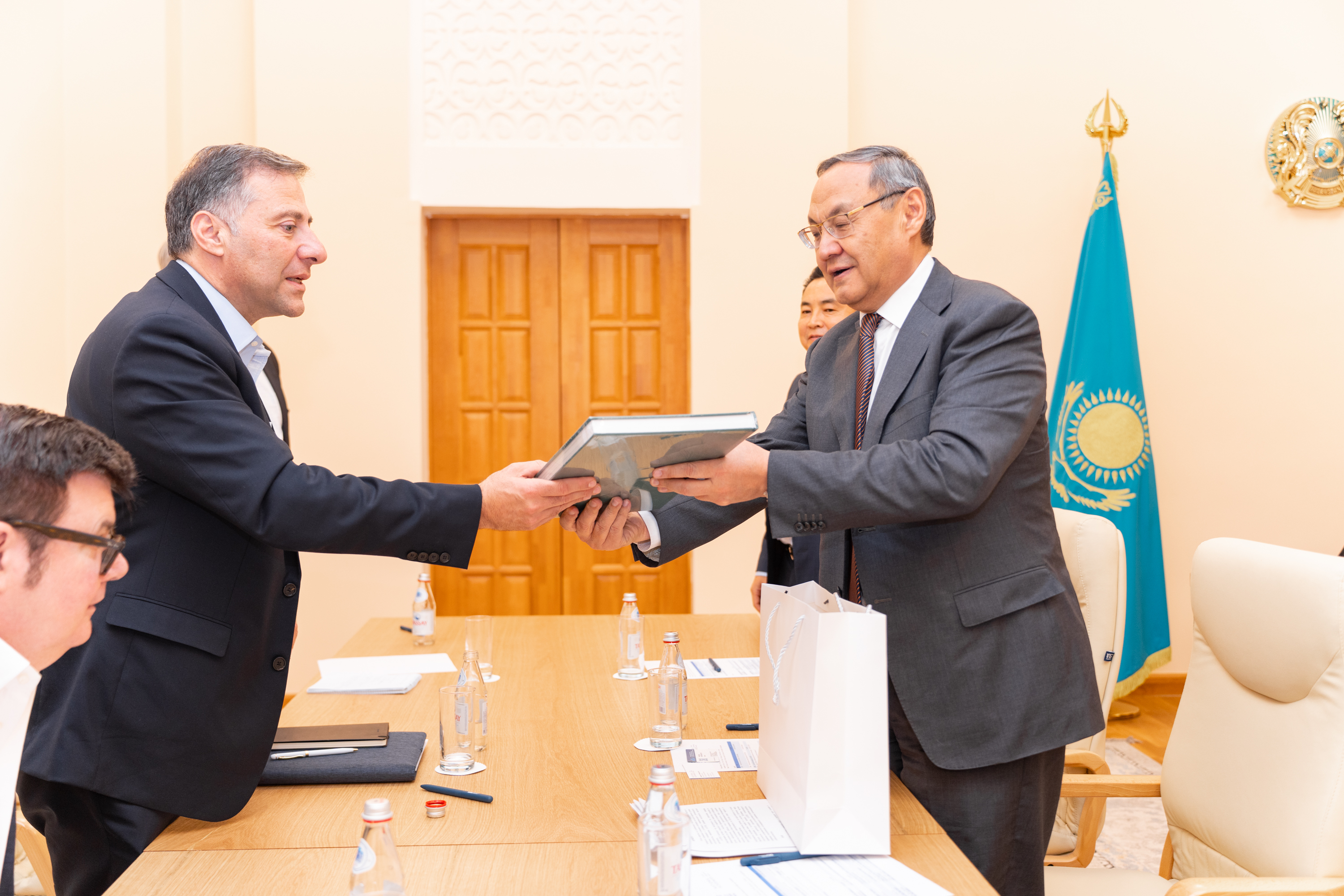
A working meeting was held at the “Gylym Ordasy” between the National Academy of Sciences of the Republic of Kazakhstan under the President of the Republic of Kazakhstan and the U.S. National Academy of Sciences (NASEM).
The event was attended by Professor Akhylbek Kurishbayev, President of the NAS RK, senior officials of the Academy, as well as the delegation of NASEM led by Dr. Vaughan Turekian, Executive Director of the Office of International Networks, Cooperation and Security.
The U.S. side was represented by Jeff Martin, Managing Director (Silicon Valley, USA), and John McGregor, Deputy Head of the Political-Economic Section of the U.S. Consulate General in Almaty.
During the meeting, both sides presented the structure and strategic priorities of their academies and discussed opportunities for future cooperation. Special attention was given to the development of science diplomacy and to initiatives implemented by NASEM within the framework of the Abraham Accords, including the AASPIRE program, which aims to establish “sandboxes” for breakthrough research and innovation.
The parties noted strong potential for collaboration in several priority scientific areas, including:
– health and medical technologies;
– energy and transportation;
– agriculture and agrotechnologies;
– water and natural resources;
– space science and astronomy.
Following the discussions, the parties agreed to develop long-term scientific cooperation, including:
– regular online and offline seminars and scientific workshops to strengthen links between researchers in both countries;
– thematic events to identify shared scientific interests in priority fields;
– enabling conditions for the preparation of joint scientific projects and programs.
The meeting concluded with a mutual commitment to maintain an ongoing dialogue and strengthen scientific cooperation for the advancement of science, innovation, and the training of future generations of researchers.